The Story Behind “Mo Mường”
When I founded Mo Mường, it wasn’t just a club, it was an answer to a quiet ache I couldn’t name. My hometown, once known as the ancestral land of the Mường people, often spoke of our culture only in the past tense. Songs became exhibits, costumes turned into museum pieces, and the living pulse of identity grew fragile beneath glass. I began to wonder: if the Mo chants fell silent, who would remember the stories behind them?
What started as a small after school initiative soon became a collective heartbeat. With the help of my seniors and friends, I began filming the rhythms of daily life in the villages, the Mo Mường speech, weaving rituals, and the cuisine. Those moments, once fleeting, found new life through Mo Mường TV, a YouTube archive, and Mường Films, a TikTok channel where thousands of young viewers encountered voices that might have otherwise faded away.
From there, Mo Mường evolved beyond preservation, it became participation. We hosted workshops connecting artisans and students to reimagine how tradition could adapt in a digital age, and organized a cultural fair with fifteen interactive booths, where modern teenagers learned to beat gongs and dance the múa sạp beside villagers. By the end, we raised
Yet what transformed me most was not the project’s success but its quiet reconciliation. For years, I had lived between two worlds: too modern for the village, too “ethnic” for the city.
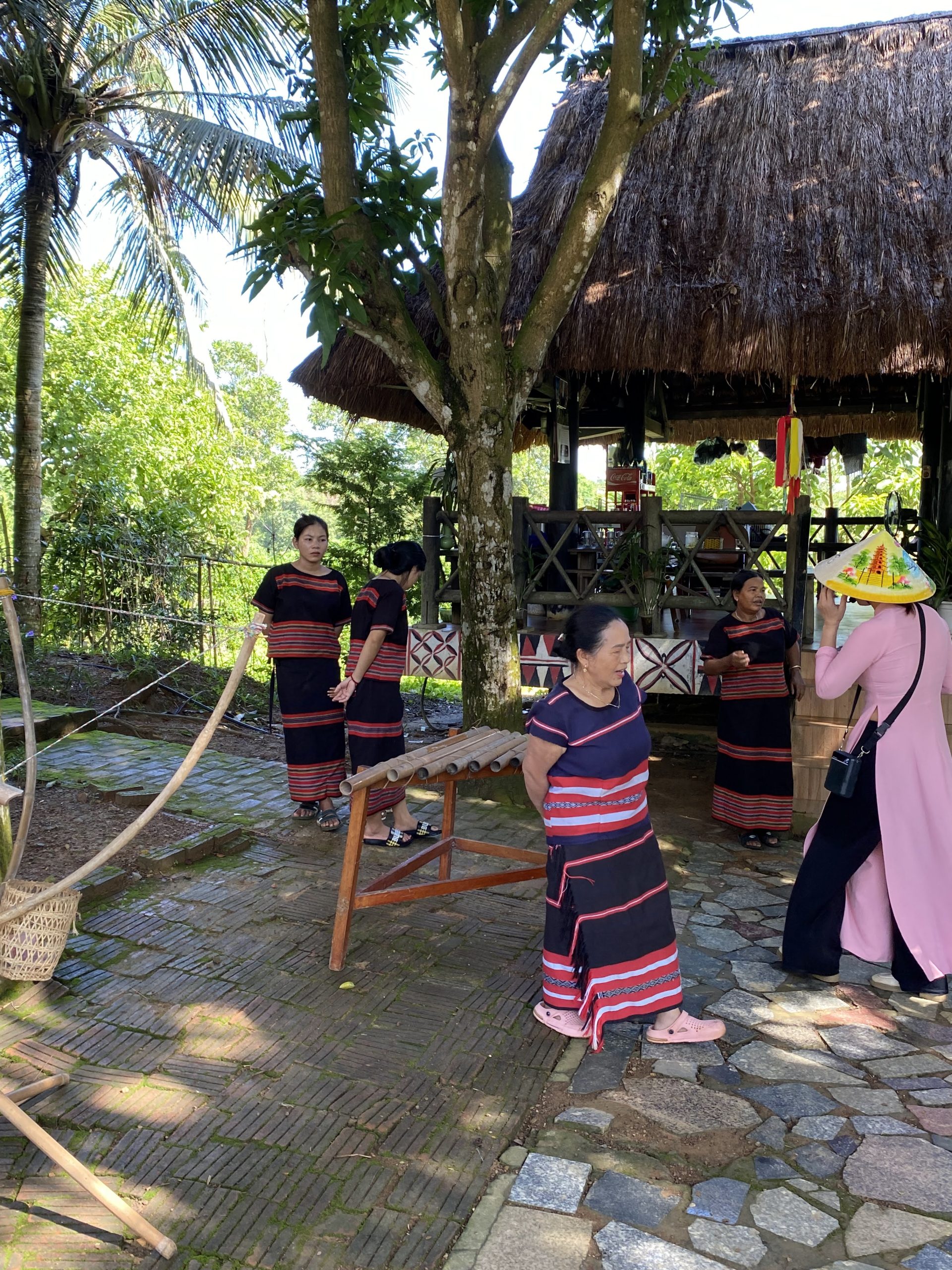
Mo Mường taught me I didn’t have to choose. Leadership, I realized, isn’t about rescuing tradition from modernity, it’s about allowing both to coexist in honest conversation.
That’s what Mo Mường gave me: the understanding that preservation is not nostalgia, and that identity, when shared, becomes stronger, not older, with time.
